

Hantaviruses are rare but potentially serious zoonotic viruses that can cause severe respiratory or renal disease. Although infections are uncommon, recent reports linking an outbreak in a cruise ship environment to the Andes virus have renewed public health interest.
What are hantaviruses?
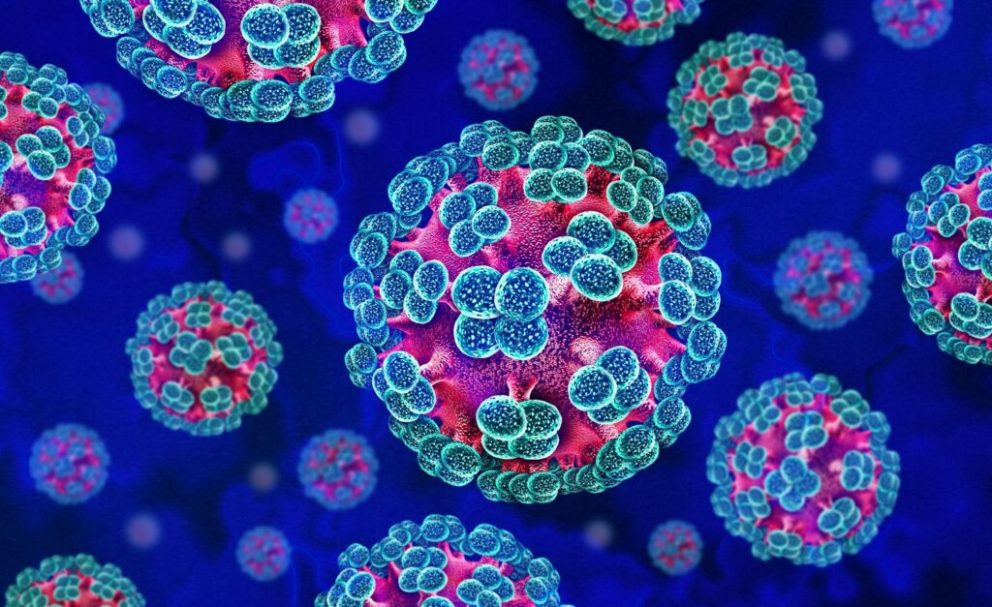
They are a group of enveloped RNA viruses belonging to the Hantaviridae family. They are zoonotic pathogens, meaning they are transmitted from animals to humans, and public health bodies recognise hantaviruses globally as a cause of serious respiratory and renal disease.
Hantavirus infections are relatively uncommon worldwide but can be severe. Different species are associated with distinct clinical syndromes.
Did you know? The WHO estimates that 10,000 to over 100,000 infections occur each year, with the largest disease burden reported in Asia and Europe.
Where are hantaviruses found?
Rodents naturally carry the virus, which act as the primary reservoir. Rodents shed the virus in their urine, droppings, and saliva.
Human exposure most commonly occurs when:
Surfaces or objects contaminated with rodent excreta are touched, followed by contact with the mouth, nose, or eyes.
Dust contaminated with rodent urine or faeces becomes airborne.
People enter enclosed or poorly ventilated spaces where rodents are present.
Did you know? Environments such as cabins, storage areas, utility spaces, food handling areas, and rarely used rooms present higher risk if rodent activity is present.
What does hantavirus cause?
Early symptoms of hantavirus infection are often non‑specific and may include:
- Fever, fatigue, and muscle aches.
- Headache, nausea, vomiting, and abdominal pain.

In more severe cases, infection can progress to:
- Hantavirus Pulmonary Syndrome (HPS), with rapid onset of breathing difficulties and respiratory failure.
- Haemorrhagic Fever with Renal Syndrome (HFRS), involving kidney impairment and bleeding complications.
Prompt medical assessment is essential where infection is suspected.
How is hantavirus transmitted?
- Inhalation of aerosols contaminated with rodent urine, droppings, or saliva
- Direct contact with contaminated materials, followed by touching the face
Unlike many respiratory viruses, human‑to‑human transmission is extremely rare for most hantavirus strains.
Why Is this not currently a hospital concern?
Hantaviruses are not considered a routine healthcare‑associated infection because:
- Transmission is primarily environmental, rather than patient‑to‑patient.
- Rodent exposure is the dominant risk factor.
- No sustained human-to-human transmission has occurred.
Outbreaks are uncommon and, when they occur, typically stem from specific environmental exposures rather than failures in clinical infection prevention and control.
Recent events: the Andes Virus
Public health authorities have reported that the outbreak linked to the cruise ship environment has been associated with the Andes virus, a strain within the Hantaviridae family.
The Andes virus is notable because:
- It is an enveloped hantavirus, consistent with other members of the family.
- Andes virus causes HPS.
- Unlike most hantaviruses, Andes virus can spread between people in rare, limited cases — typically through prolonged close contact during its early, more transmissible stage.
- Relatively long incubation period, reported to be up to around 18 days.
Did you know? Even for Andes virus, environmental exposure to rodent excreta remains the primary transmission route, and human‑to‑human spread remains uncommon. From an infection prevention and control perspective, the strain does not change the fundamental IPC principles but reinforces the importance of environmental hygiene and early risk management in shared or enclosed spaces.
Why are hantaviruses are microbial threat?
Hantaviruses are a public health concern because:
- Severe disease can develop rapidly
- Early symptoms may delay diagnosis
- Rodent reservoirs are widespread and difficult to eliminate
- Exposure may occur in community, occupational, travel, or hospitality settings
Did you know? Outbreaks are uncommon, but when they occur, they highlight the importance of environmental controls and hygiene measures.
How can you prevent the spread of hantaviruses?
Key prevention measures recommended by public health authorities include:
- Effective rodent control and exclusion
- Avoiding dry sweeping or vacuuming of areas contaminated with rodent droppings or urine
- Using damp cleaning and disinfection methods to minimise aerosol generation
- Wearing appropriate personal protective equipment (PPE) when cleaning potentially contaminated spaces
Environmental cleaning and disinfection play an important role in reducing the risk of indirect exposure.
How can you defend against Hantaviruses?
As an enveloped virus, hantaviruses — including Andes virus — are among the least resistant viruses to disinfection.
Disinfectants with virucidal activity, used according to validated standards, effectively inactivate hantaviruses. Relevant standards include EN 14476.
Broad‑spectrum disinfectants, such as chlorine dioxide‑based products, provide protection against a wide range of pathogens, not only viruses, but also bacteria, mycobacteria, fungi, and bacterial spores.
Did you know? Using a broad‑spectrum disinfectant supports effective infection prevention and control in environments where multiple microbial risks may coexist.
Chlorine, ppm concentration and why EN standards are important
Disinfection guidance during outbreaks often refers to chlorine‑based products and parts per million (ppm) concentrations, such as 1,000 ppm or 10,000 ppm. However, concentration alone does not determine whether a disinfectant will be effective.
EN 14885 outlines the standards used to support the biocidal efficacy of chemical disinfectants and antiseptics in the European market. It provides a framework for assessing disinfectant activity and allows manufacturers, end users and competent authorities to evaluate product claims based on standardised and repeatable efficacy testing.
Efficacy testing under EN 14885 considers multiple factors that influence disinfectant performance, including active ingredient concentration, contact time, surface conditions and the presence of organic matter. Not all disinfectants contain the same active ingredients, and different chemistries have different mechanisms of action. As a result, the same ppm recommendations should not be assumed to apply equally across different disinfectant types.
Did you know? A recommendation such as “1,000 ppm” or “10,000 ppm” is not universally applicable to all disinfectants. Efficacy depends on the active ingredient, its mode of action, and how it has been tested, which is why validated EN data is critical.
References:
Public Health England (2008). Hantaviruses. [online] GOV.UK. Available at: https://www.gov.uk/guidance/hantaviruses.
UK Health Security Agency (2026). What Is hantavirus? How Is It Transmitted and What Are the symptoms? – UK Health Security Agency. [online] Blog.gov.uk. Available at: https://ukhsa.blog.gov.uk/2026/05/05/what-is-hantavirus-how-is-it-transmitted-and-what-are-the-symptoms/.
WHO (2026). Detail – Hantavirus. [online] Who.int. Available at: https://www.who.int/news-room/fact-sheets/detail/hantavirus.Clinic, C. (2019).
CDC (2024). About hantavirus. [online] Hantavirus. Available at: https://www.cdc.gov/hantavirus/about/index.html.
England, N. (2026). NHS England» Infection prevention and control measures for asymptomatic contacts, clinically suspected, and confirmed cases of Andes virus (hantavirus) in healthcare settings. [online] England.nhs.uk. Available at: https://www.england.nhs.uk/long-read/ipc-measures-asymptomatic-contacts-cases-hantavirus-healthcare-settings/.