

High-level disinfection (HLD) is essential in healthcare to prevent healthcare-associated infections (HAIs) and combat antimicrobial resistance (AMR).
HAIs can lead to serious illness, prolonged hospital stays, and increased healthcare costs, often originating from contaminated medical devices or surfaces. By eliminating most pathogens, including resistant microorganisms, HLD plays a critical role in reducing transmission risk. But not all disinfectants are created equal. For decades, chlorine-based products have been widely used for surface disinfection. However, growing evidence highlights their limitations of safety, practicality, and by-product formation. This is where chlorine dioxide (ClO2) enters the conversation as a more effective alternative.

The reason chlorine dioxide is often compared to chlorine
The main similarity between chlorine and chlorine dioxide is that both are oxidisers. They react with microorganisms’ vital structures by taking electrons, damaging cell walls, altering chemical bonds in key proteins, and ultimately destroying the organism. However, despite sharing part of their name, chlorine and chlorine dioxide are chemically very different.
Chlorine dioxide is a compound that differs from elemental chlorine, both in its chemical structure and in its behaviour1. The properties of ClO2 result from single-electron transfer reactions, making it a strong oxidising agent. Unlike chlorine, ClO2 does not tend to react with organic materials to form chlorinated species or with ammonia to form chloramine1. This means it avoids the formation of potentially harmful by-products commonly associated with chlorine-based disinfectants.
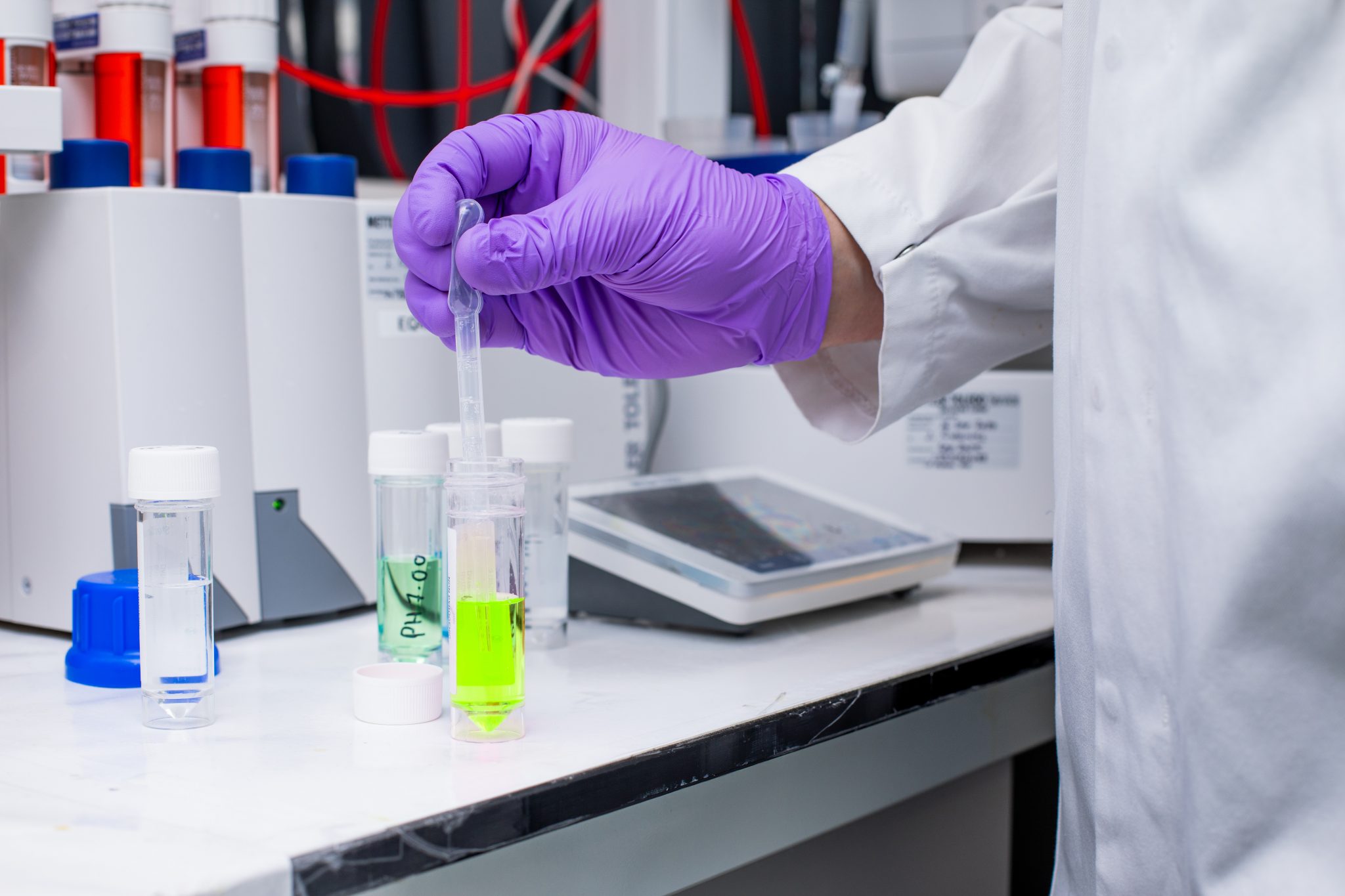
Its main advantage over chlorine is that it reduces the formation of harmful organochlorine compounds1. In fact, research shows that ClO2 reduces the formation of trihalomethanes and other organic chlorinated compounds, minimising the production of by-products and offering a safer profile for healthcare environments2.
Chlorine dioxide is also about 10 times more soluble in water than chlorine1, making it easier to prepare and use consistently.
Chlorine and chlorine dioxide at a glance
Chlorine
Chlorine dioxide
Type
Elemental chlorine (Cl2)
A compound (ClO2), different in chemical structure and behaviour
Reaction with organic material and ammonia
Forms chlorinated species and chloramine
Does not tend to form chlorinated species or chloramine
By-products
Potentially harmful by-products, including organochlorine compounds
Reduced formation of trihalomethanes and other organic chlorinated compounds
Solubility in water
Less soluble
About 10 times more soluble than chlorine
Sources: Andrés et al. (2022); Jiang et al. (2024).
Performance and practicality: why it’s time to rethink chlorine tablets in healthcare

A 2017 UNISON survey of healthcare workers using chlorine-based products reported common side effects:
Skin complaints59%
Asthma-like symptoms52%
Headaches43%
Irritation to eyes41%
Throat irritation41%
Nasal discomfort34%
Source: UNISON survey of members (2017), reported in NHS Employers guidance on the safe use of chlorine-based disinfectant chemicals.
Chlorine tablets often present challenges
1
Complicated preparation, including tablet counting and dilution calculations.
2
Health risks when used at high concentrations needed for high-level/step-up disinfection.
3
Potential damage to surfaces and sensitive medical equipment.

What sets chlorine dioxide apart from chlorine?
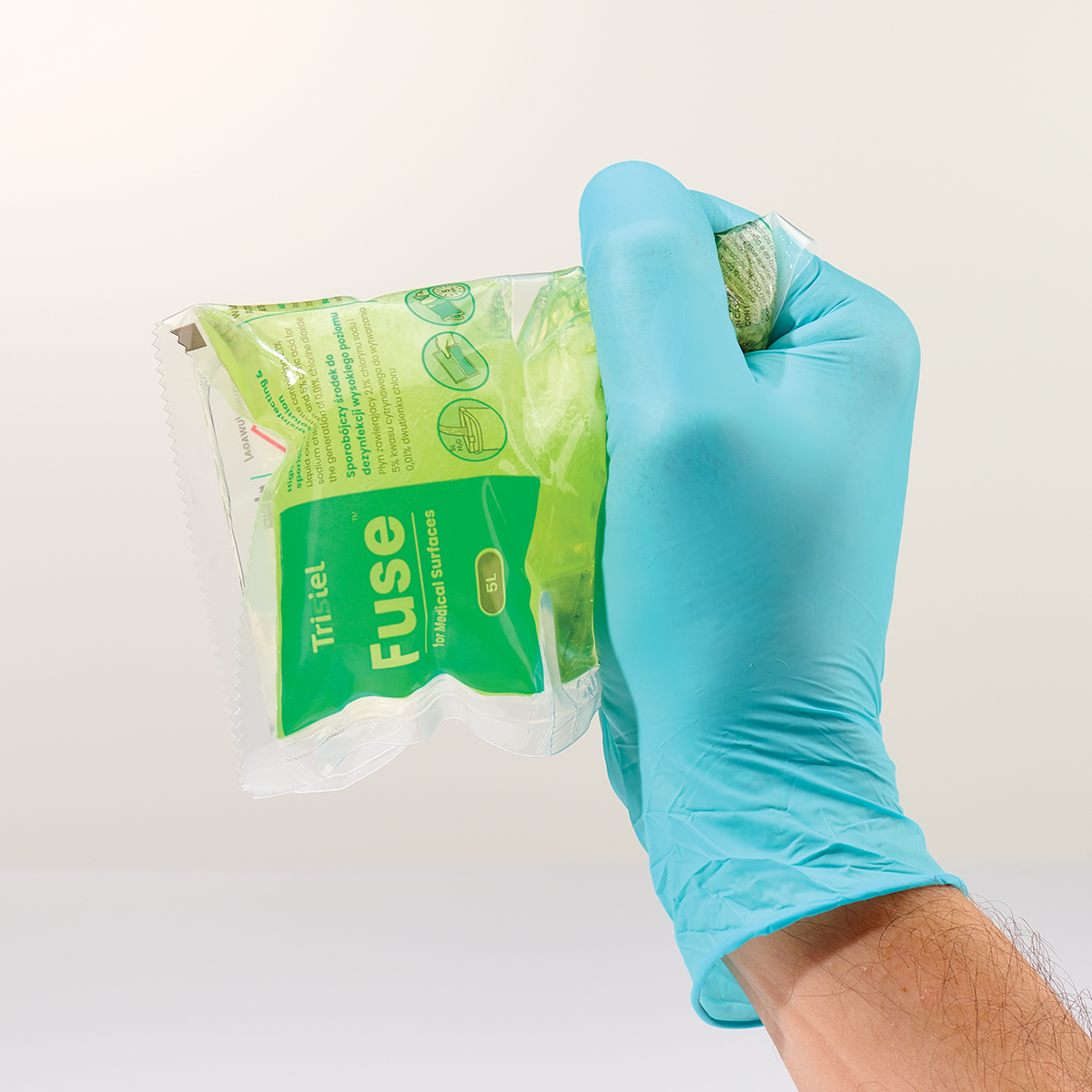
Tristel’s chlorine dioxide offers sporicidal, high-level disinfection whilst delivering consistent results with one contact time and one dilution rate against microorganisms of concern.
Additionally, ClO2 has a higher oxidising power (over 2.5 times) than chlorine-based disinfectants2. These characteristics make ClO2 internationally recognised as the most ideal replacement for chlorine disinfectants2.
| Active chemistry | Tristel ClO2 | Chlorine (Cl2) |
|---|---|---|
| Disinfection level | High | High |
| One contact time? | Yes | No |
| MEC sporicidal action | 100 – 200 ppm | 5,000 ppm |
| Dilution per 5 L of solution | 1 sachet | 25 – 50 tablets |
Key takeaways
Chlorine and chlorine dioxide are both oxidisers, but chlorine dioxide is chemically very different from chlorine.
Chlorine dioxide reduces the formation of harmful organochlorine by-products such as trihalomethanes.
With a higher oxidative capacity, chlorine dioxide works at far lower concentrations, so ppm alone isn’t a fair comparison.
Chlorine tablets bring complicated preparation and reported health effects for staff.
References and further reading (3)
- Andrés, C.M.C., Pérez de la Lastra, J.M., Andrés Juan, C., Plou, F.J. and Pérez-Lebeña, E. (2022). Chlorine dioxide: friend or foe for cell biomolecules? A chemical approach. International Journal of Molecular Sciences, 23(24), 15660.
- Jiang, Y., Qiao, Y., Jin, R., Jia, M., Liu, J., He, Z. and Liu, Z. (2024). Application of chlorine dioxide and its disinfection mechanism. Archives of Microbiology, 206(10).
- NHS Employers. Safe use of chlorine-based disinfectant chemicals guidance (includes findings from the 2017 UNISON survey).