
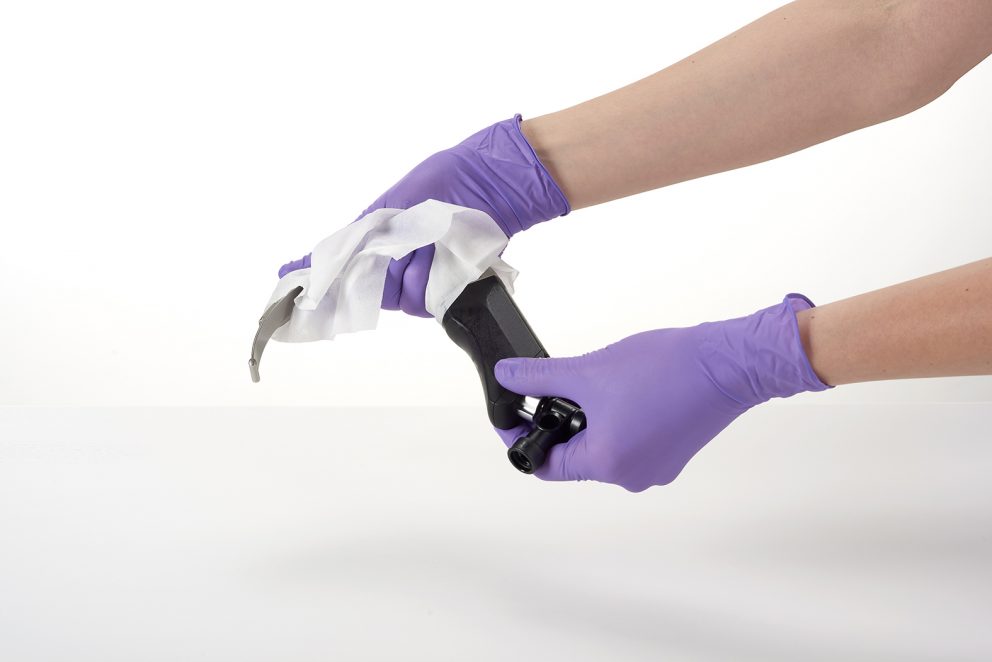
Manual disinfection is a proven and effective method for disinfection. One important factor influencing its success is the pressure applied during the wiping process.
EN 16615 is designed to evaluate the performance of disinfectants when applied with a wipe. In this test, the pre-impregnated wipe is then wrapped around a standardised weight and moved across four test fields. The first of these fields is inoculated with microorganisms and an interfering substance. After wiping, the microbial load on the first field is measured to assess both the disinfectant’s efficacy and on the other three fields whether microorganisms have been spread across the surface rather than eliminated.
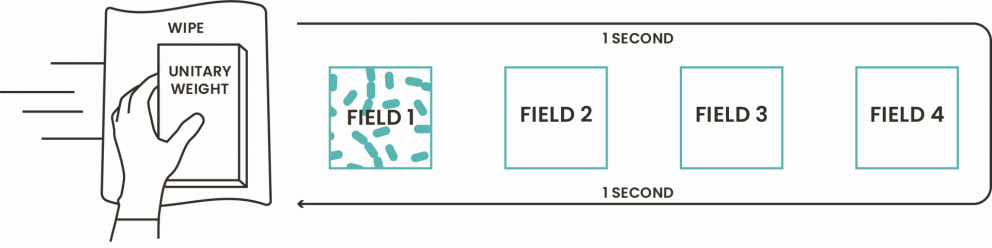
The standardised weight used in EN 16615 ranges from 2.3 to 2.5 kg. But does this range truly reflect the pressure applied in real-world use?
To answer this, Tristel developed a bespoke test method that adapted the standard 4-field approach by introducing a range of weights. Tristel Trio Wipes System Sporicidal Wipe was tested under conditions both above and below the standard weight range to simulate the variability in wiping pressure. The results demonstrated that Tristel Trio Wipes System remains effective across a range of applied forces, reinforcing the reliability of manual disinfection when performed correctly.
The Background
EN 16615 outlines strict parameters to ensure consistent testing. It uses a unitary weight of 2.3 to 2.5 kg to simulate average wiping pressure, applied via a block with defined size and material. The test surface was made from 2.0 mm Polyurethane (PUR). The pre-impregnated wipe substrate was used in place of the standard recommended wipe.
While EN 16615 sets strict parameters for consistency, it doesn’t reflect real-world variability. The fixed weight of 2.3 to 2.5 kg may not represent typical user-applied pressure.
These limitations raise an important question: how does pressure variation affect efficacy?
To explore this, we set out to understand the impact of variable wiping pressure on disinfectant performance, aiming to bridge the gap between controlled testing and everyday use.
The Preliminary Test
At Tristel HQ, we conducted a blind study with 50 participants, each asked to wipe a calibrated scale with a dry wipe, with both their right and left hand. A contact time of 30 seconds was observed. The highest and lowest pressures were recorded, and an average was calculated. Results ranged from 0.098kg to 4.02kg, with the overall average 1.02kg. This confirmed our hypothesis: wiping pressure varies widely between users, highlighting a key limitation in the current validation method.
The Bespoke Test
To assess the impact of pressure on disinfectant efficacy, we developed a custom test based on EN 16615, using Staphylococcus aureus as the challenge organism. The goal was to explore any relationship between pressure and performance, not to revalidate efficacy.
We introduced six weight levels from 1 to 3.5 kg, reflecting real-world wiping pressures. A custom quartz-based object was designed to match EN 16615 specifications while allowing for adjustable, evenly distributed weight. Each configuration was tested in duplicate under consistent conditions, enabling a controlled evaluation of pressure variation.

In Conclusion
The data from our study does not reveal a trend between wiping pressure and disinfectant efficacy. Instead, the disinfectant wipe was shown to possess sufficient biocidal activity in a 30 second contact time at each weight. This confirms that variable wiping pressure, known to occur in practice, does not impact the performance of chlorine dioxide.
These findings add to the robust body of evidence supporting Tristel Trio Wipes System, which includes multiple EN 16615 tests across various organisms, simulated use studies with different users, and other EN methods that do not involve mechanical action. Together, they reinforce the reliability and effectiveness of our solution in real-world conditions.