

When selecting reprocessing solutions for your medical device, it is important to choose products that are both compatible and effective.
Material compatibility ensures that the disinfectant and the device work safely together. If a disinfectant is not compatible with the device materials, it can cause damage ranging from cosmetic changes, such as discoloration, to surface alterations like stickiness, or even material degradation that may impact device performance and patient safety.
At the same time, it is essential to use products that provide the required level of cleaning and disinfection for the intended application, ensuring the device is safe for patient use.
Let’s look at these two requirements in more detail.
What is material compatibility?
Material compatibility refers to how different materials interact with specific chemicals. Depending primarily on the composition and physical properties of the material, other factors include the mode of action, concentration and exposure conditions of the disinfectant.
Overall, material compatibility needs to reflect a medical devices individual material’s ability to withstand exposure to cleaning agents and disinfectants without compromising its functionality. The testing methodology for material compatibility depends on:
- How the disinfectant is used.
- The number of test cycles to be performed.
- The medical device manufacturer requirements on the condition of the device after testing.
Typical methods include:
Immersion studies
This study involves submerging the device or material in the test solution for an extended period. The approach is often considered the gold standard, as it represents a worst-case exposure scenario. However, it may not always reflect actual clinical use conditions and is therefore not always the most appropriate method.
Wiping studies
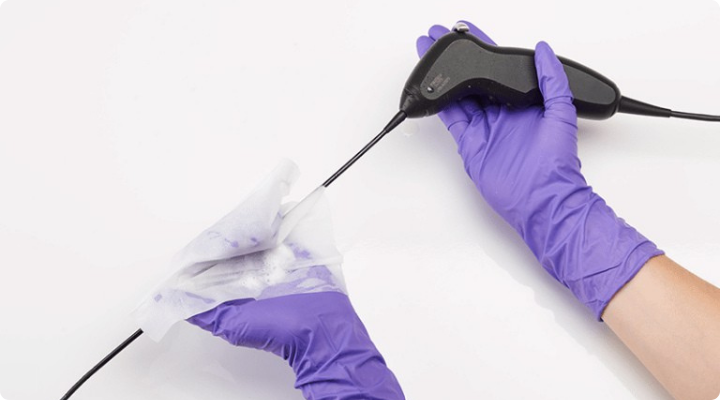
This study is designed to replicate real-life use of disinfectant wipes. They allow for the evaluation of both material compatibility and the impact of the mechanical action involved in wiping.
Wrapping (wet-patch) studies
This study involves wrapping a material sample or device in a wipe impregnated with the disinfectant chemistry. It is particularly useful for wipe-based products or when application by wiping is intended but performing a full wiping study is not practical.
What is efficacy validation?
Efficacy validation refers to the evidence demonstrating that a reusable medical device can be safely reprocessed using specific products. Which include cleaning agents and/or disinfectants, resulting in the device being ready for safe use.
Disinfectant manufacturers are responsible for performing testing in accordance with relevant standards. Testing needs to demonstrate both the efficacy of their products and their material compatibility to support any microbiological claims.
Medical device manufacturers are also responsible for conducting efficacy validation on their specific devices. This includes verifying that selected reprocessing products and methods are effective for the device. As well as providing clear, validated instructions to end users to ensure safe use for subsequent patients.
Efficacy validation testing is governed by ISO 17664:2021, “Processing of health care products — Information to be provided by the medical device manufacturer for the processing of medical devices.”
This standard specifies that medical device manufacturers are responsible for validating at least one automated and one manual reprocessing method for their reusable devices.
These validations are typically performed through simulated-use testing. The validated processes are then defined as the recommended reprocessing methods and included in the device’s instructions for use.
Simulated-use testing
This testing method is designed to replicate a real-life reprocessing cycle. In this process, a medical device is deliberately contaminated with representative microorganisms and organic soil before undergoing the decontamination procedure. Following reprocessing, the device is evaluated using defined markers, such as residual protein to assess cleaning efficacy, or remaining microbial contamination, to assess disinfection efficacy.
In some cases, regulatory standards define the test parameters. Where no harmonized specifications or standards exist, appropriate parameters must be established to ensure a scientifically sound validation of the reprocessing process. When defining these parameters, the following aspects should be considered:
- The intended use and clinical application of the medical device.
- The actual method of disinfectant application in clinical practice.
- The selection of test soil locations, taking into account device design features, including worst-case or hard-to-clean areas such as joints, crevices, or ridges.
What Makes Chemistry Compatible with a Medical Device?
All disinfectant chemistries interact with materials to some extent. When the properties of the material and the disinfectant are well aligned, the material will remain stable over repeated reprocessing cycles.
However, incompatibility can arise when certain chemistries react adversely with the material. For example, some polymers may be sensitive to alcohols, leading to stress cracking or embrittlement. While low grade metals may be susceptible to oxidizing agents, which can cause discoloration or corrosion.
Other factors that can influence compatibility include contact time, temperature, frequency of exposure and the method of application.
For this reason, material compatibility must be assessed and validated under realistic use conditions to ensure that the medical device maintains its functional performance, structural integrity and safety throughout its intended lifetime.
The Power of Chlorine Dioxide
Tristel’s proprietary chlorine dioxide (ClO2) is generated through the reaction of sodium chlorite with citric acid and is effective against a broad range of pathogens at low concentrations. ClO2 has a lower oxidation potential compared to other commonly used disinfectants such as peracetic acid, hydrogen peroxide and aqueous chlorine, making it less aggressive toward materials.
As a result, chlorine dioxide generally demonstrates good compatibility with a wide range of materials, including many plastics, rubbers and adhesives commonly used in medical devices.
Unsure if your medical device is compatible with Tristel products? Use our device compatibility tracker! Simply enter the make and model to find out.
REFERENCES
Association for the Advancement of Medical Instrumentation. (2020, reaffirmed 2023). AAMI TIR12:2020 (R2023): Designing, testing, and labeling medical devices intended for processing by health care facilities—A guide for device manufacturers.
https://www.aami.org/standard/aami-tir122020-r2023-pdf/
European Committee for Standardization. (2022). EN 14885:2022: Chemical disinfectants and antiseptics—Application of European standards for chemical disinfectants and antiseptics.
https://www.en-standard.eu/bs-en-14885-2022-chemical-disinfectants-and-antiseptics-application-of-european-standards-for-chemical-disinfectants-and-antiseptics/
ASTM International. (2021). ASTM D543‑21: Standard practices for evaluating the resistance of plastics to chemical reagents.
https://www.astm.org/d0543-21.html