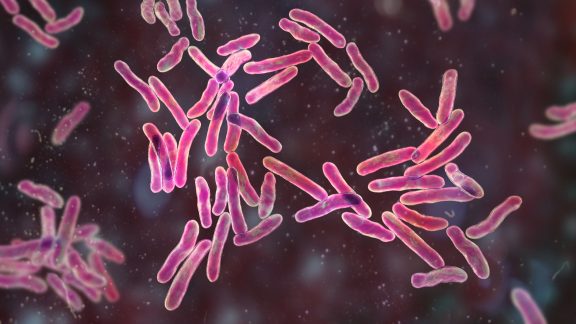
Drains have long sat at the bottom of the infection prevention and control (IPC) priority list, out of sight and out of mind. But growing evidence is changing that. Experts now recognise sinks, drains and the biofilms inside them as a real source of healthcare-associated infections (HAIs), one that standard cleaning protocols simply aren’t built to handle.
Here are seven of the biggest challenges facing healthcare drains today.
An overlooked reservoir of dangerous pathogens
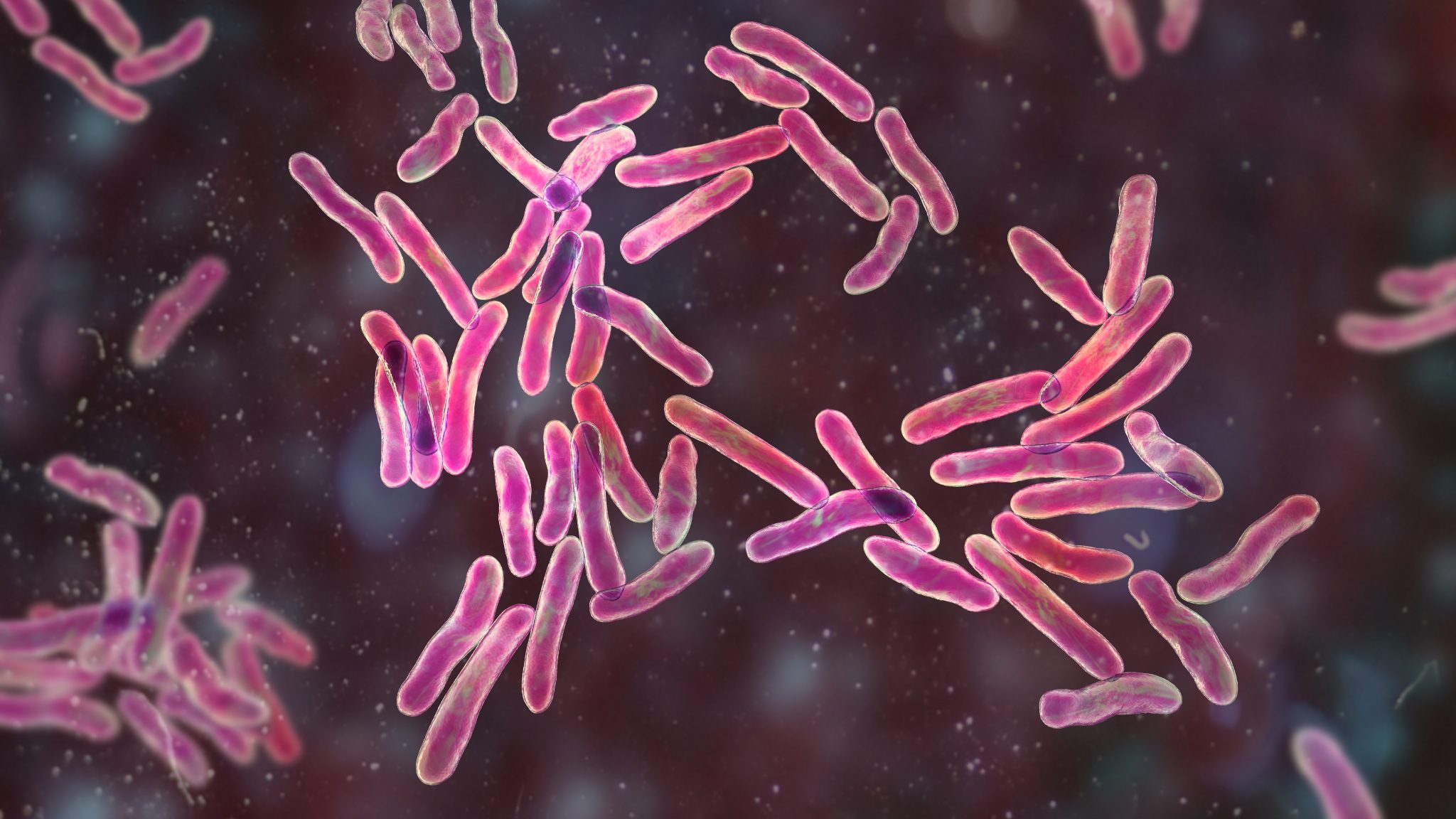
Hospital drains often harbour complex communities of microorganisms, known as biofilms, which can include multidrug-resistant organisms (MDROs) that resist common treatments. Studies have found large numbers of harmful bacteria, particularly Pseudomonas spp., living within drain systems1. Because a single hospital can have hundreds to thousands of sinks, many hidden from view, staff can often trace outbreaks back to a drain.
Splash zones reach further than you’d think
The risk doesn’t stop at the sink.

Splash zone
Up to 2 m
Running a tap can spray droplets that can carry pathogens up to two metres away2.
Within that zone, audits found contamination on:
Intravenous equipmentaround 65%
Respiratory equipment27%
Personal care items68%
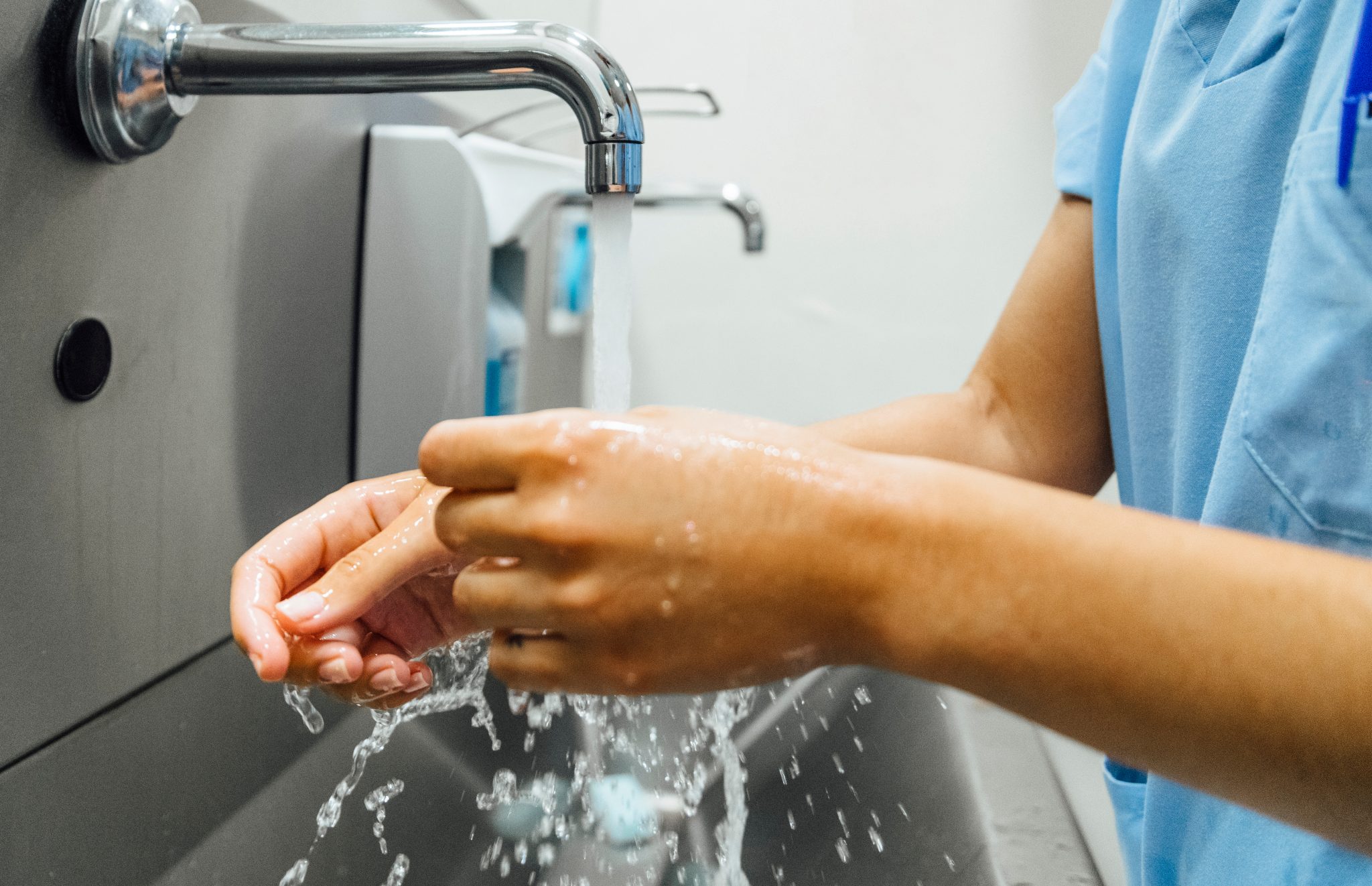
That creates a plausible pathway for pathogens to move from a contaminated drain to equipment used directly on patients.
Biofilms are built to survive
A biofilm isn’t just a colony of microorganisms. It’s a community of different species that wraps itself in a protective layer, making it difficult for most disinfectants to get through.
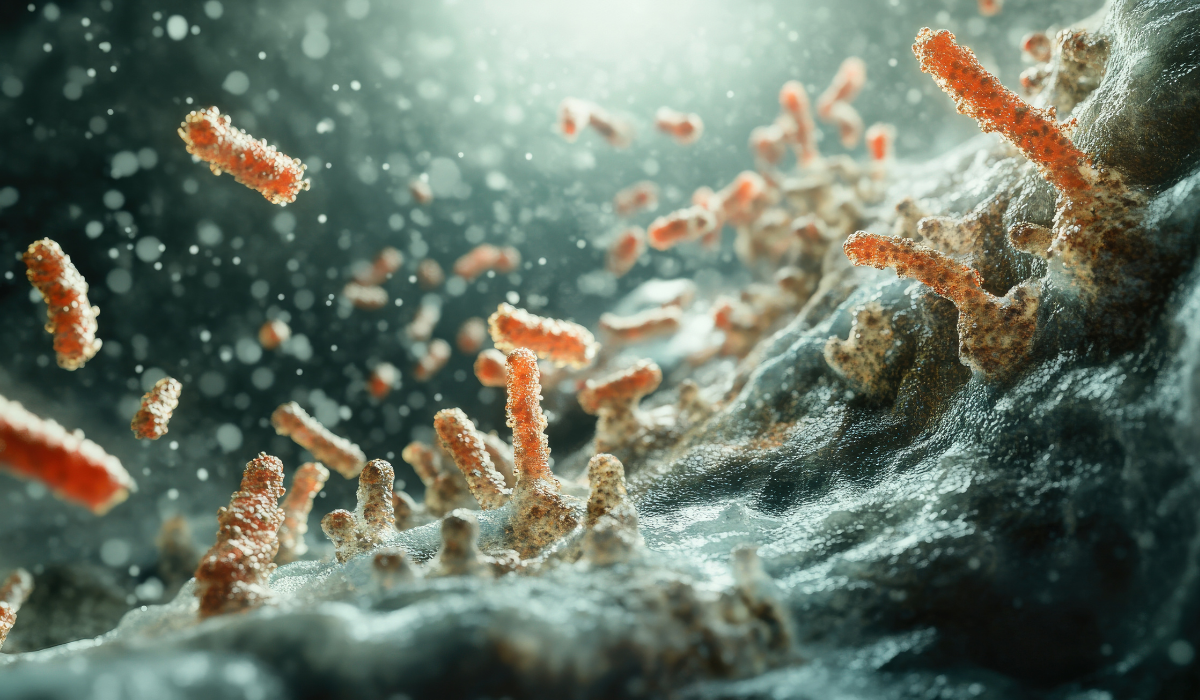
Drains offer the perfect environment for biofilms to thrive: warm, wet, and full of nutrients3.
Interestingly, much of what feeds these biofilms isn’t handwashing at all, but the fluids, antimicrobials and waste that go down the sink.
Hidden layers of resistance

Three hidden layers of resistance
Select each layer to find out more.
Where cells sit
Some cells behave differently depending on where they sit within the biofilm.
Dormant cells
Others become dormant, allowing them to evade treatments aimed at active cells.
The protective layer
On top of that, the protective layer itself can block or weaken disinfectants.
Outbreaks that are hard to trace, and can drag on for years
Rooms with sinks see higher rates of HAIs than rooms without them5, a strong indication that drains play a role.

Drain-related outbreaks are notoriously hard to trace back to their source, sometimes taking months, or even years, to resolve.
Current disinfection methods don’t fully solve the problem
Facilities have a few options for tackling drain contamination, though none is perfect on its own:
Thermal
How it works
Hot water or steam, heated to 60–100°C, can break down the protective layer and kill the bacteria inside, and can reach into complex drain shapes.
Things to consider
It may not reach every part of the pipework, and needs careful setup to avoid scalding.
Chemical
How it works
Usually a strong oxidising solution, including those that can be applied as a foam so it can travel through the drain properly.
Things to consider
How well it works depends on the chemical used, how deeply it penetrates, and how long it stays in contact with the pipe surfaces.
Physical removal
How it works
Replacing the pipework or sinks entirely, sometimes switching to waterless care instead, is often treated as a last resort.
Things to consider
It’s expensive and disruptive, and there’s no guarantee the biofilm won’t simply grow back.
There’s no universally accepted way to prove a disinfectant actually works
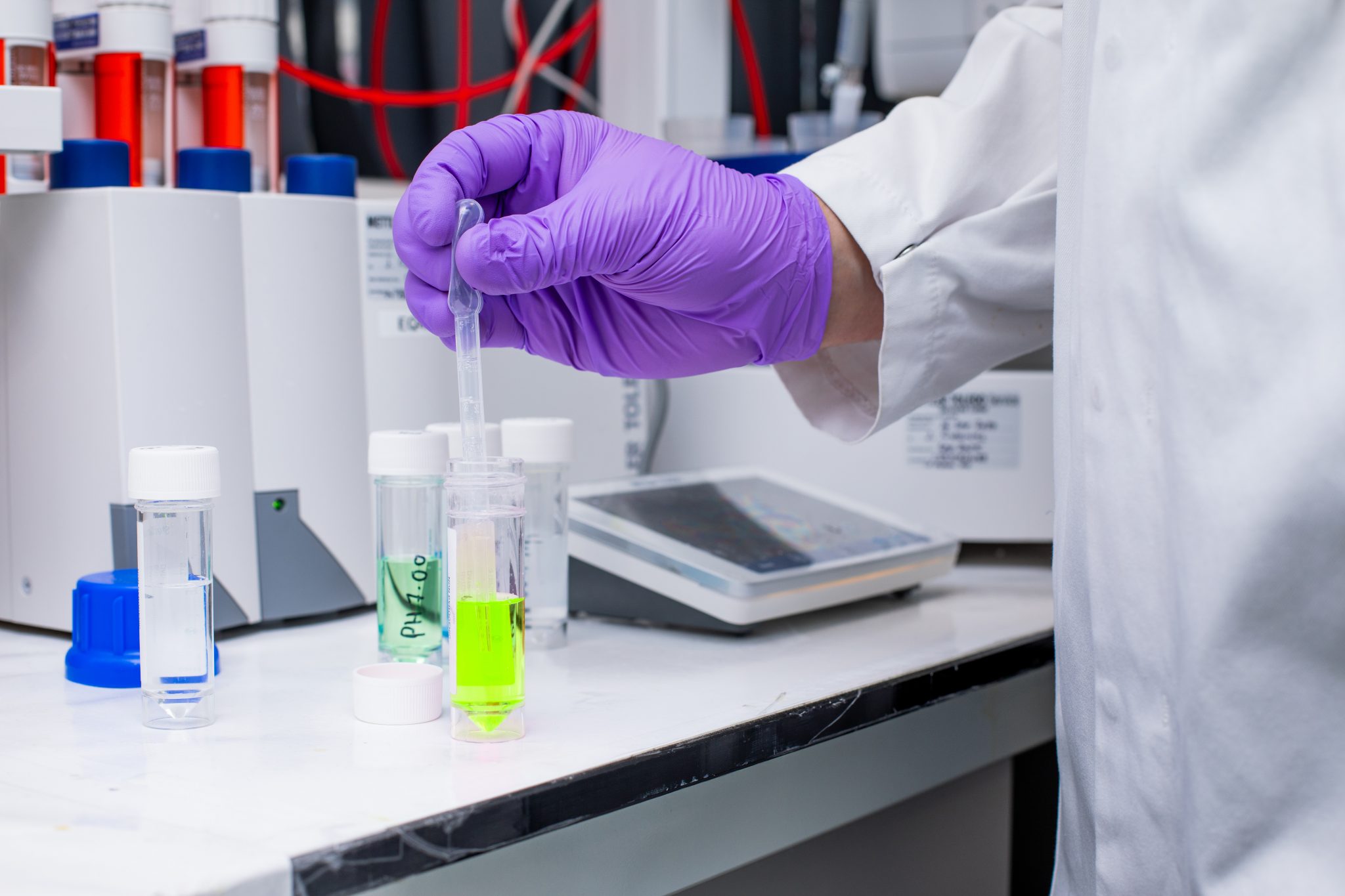
Right now, there’s no single, standard way to test how well a disinfectant performs against drain biofilms. Evidence tends to come from a mix of sources.
Good to know
Where the evidence comes from
- Laboratory models such as the MBEC test or CDC biofilm reactors
- Real-world data that varies considerably depending on drain design
- Regulations offer some guidance
- Independent testing remains the gold standard
Until testing becomes more standardised, comparing products, and their claims, will remain genuinely difficult.
Where does this leave disinfection strategy?
An effective drain disinfectant needs to tick a lot of boxes. It must:
- Eliminate a broad range of microorganisms, including spores
- Penetrate and break down biofilms
- Reach deep into complex pipe shapes
- Be safe for materials, staff and the environment
- Offer a practical, cost-effective way to deliver lasting protection over time
Strong oxidising foam agents are emerging as leading candidates for this job. Chlorine dioxide eliminates a broad range of microorganisms, including bacteria and their spores, and continues to work even when organic matter is present.
It’s also less corrosive than chemicals like hypochlorite, and leaves behind minimal harmful by-products.
In independent tests, chlorine dioxide reduced bacteria within biofilms in as little as 30 seconds6.
Key takeaways
Sinks, drains and their biofilms are a real source of healthcare-associated infections.
Splash zones can carry pathogens up to two metres, onto equipment used directly on patients.
Biofilm bacteria can be up to 1,000 times harder to kill, and no current method fully solves the problem on its own.
An effective drain disinfectant must eliminate spores, break down biofilms and reach deep into pipework.
References and further reading (6)
- Butler, J. and Upton, M. (2023). Point-of-care characterisation of microorganisms in hospital sink traps using nanopore sequencing. Journal of Hospital Infection.
- Garvey, M.I., Williams, N., Gardiner, A., Ruston, C., Wilkinson, M.A.C., Kiernan, M., Walker, J.T. and Holden, E. (2023). The sink splash zone. Journal of Hospital Infection, 135, pp.154–156.
- Grabowski, M., Lobo, J.M., Gunnell, B., Enfield, K., Carpenter, R. and Barnes, L. Characterizations of handwashing sink activities in a single hospital medical intensive care unit.
- Maillard, J-Y. and Centeleghe, I. (2023). How biofilm changes our understanding of cleaning and disinfection. Antimicrobial Resistance & Infection Control, 12, 95.
- Fucini, G.B., Geffers, C., Schwab, F., Behnke, M., Sunder, W., Moellmann, J. and Gastmeier, P. (2023). Sinks in patient rooms in ICUs are associated with higher rates of hospital-acquired infection: a retrospective analysis of 552 ICUs. Journal of Hospital Infection, 139, pp.99–105.
- Ledwoch, K., Robertson, A., Lauran, J., Norville, P. and Maillard, J-Y. (2020). It’s a trap! The development of a versatile drain biofilm model and its susceptibility to disinfection. Journal of Hospital Infection, 106(4), pp.757–764.