



Sustainability has become a key consideration in healthcare procurement, with NHS organisations and healthcare providers increasingly focused on reducing their environmental impact while maintaining high standards of patient care.
As a result, sustainability claims in healthcare have become more common. Terms such as net zero, carbon footprint, recyclable packaging and circular economy now appear across product literature and company communications. However, these claims can vary significantly in how they are measured, verified and reported. Understanding the evidence behind environmental claims is therefore becoming just as important as the claims themselves.

Why transparency matters when assessing environmental claims
Not all sustainability claims offer the same level of transparency.
A healthcare product may be described as sustainable, recyclable or low carbon, but without supporting evidence it can be difficult to understand its true environmental impact. Healthcare organisations should look for measurable data, recognised methodologies and independent verification when evaluating sustainability claims.
Good to know
The Green Claims Code in six principles
Published by the Competition and Markets Authority (CMA) for claims made to consumers, it’s also a useful benchmark for claims made to healthcare buyers. It says environmental claims must:
- 1Be truthful and accurate
- 2Be clear and unambiguous
- 3Not omit or hide important information
- 4Only make fair and meaningful comparisons
- 5Consider the full life cycle of the product
- 6Be substantiated with evidence
Five questions to ask when reviewing environmental claims
Select a question to see what good evidence looks like.
1
Is the sustainability claim backed by data?
Credible claims point to measurable figures, such as kilograms of CO2e per unit or the percentage of recycled content, not general words like “eco-friendly” or “green”.
Look for: specific numbers, units, and the date the data was collected.
2
Has the product carbon footprint been independently verified?
A third party checking the calculation against a recognised standard gives confidence that the figures are accurate and comparable with other products.
Look for: the name of the verifying body and the standard used, such as ISO 14067 or PAS 2050.
3
Does the assessment consider the entire product lifecycle?
Environmental impact happens at every stage: raw materials, manufacture, transport, use and disposal. A claim based on one stage alone can give a misleading picture.
Look for: a cradle-to-grave scope, or a clear statement of which stages are included.
4
Are environmental targets science-based?
Targets aligned with climate science show how planned reductions fit the pathway to limiting global warming, rather than being set arbitrarily.
Look for: validation by the Science Based Targets initiative (SBTi) and a clear baseline year.
5
Is sustainability progress reported transparently?
A target means little without regular public updates on progress, including where it has fallen short.
Look for: annual reporting, a consistent methodology year to year, and published data.
Common healthcare sustainability terms
Try to define each term first, then tap the card to check your answer.
Carbon footprint
Tap to reveal
A measure of greenhouse gas emissions associated with a product, service or organisation. Carbon footprints are typically reported as carbon dioxide equivalent (CO2e).
Product Carbon Footprint (PCF)
Tap to reveal
Measures the greenhouse gas emissions generated throughout a product’s lifecycle and helps organisations compare environmental impacts using a recognised methodology.
Net zero
Tap to reveal
Reducing emissions as far as possible and balancing any remaining emissions through recognised removal methods.
Circular economy
Tap to reveal
A system designed to keep products and materials in use for longer through reuse, repair, recycling and recovery.
Independent verification
Tap to reveal
An external review process that confirms environmental data and calculations have been assessed against recognised standards.
Cradle-to-grave assessment
Tap to reveal
A lifecycle approach that evaluates environmental impacts from raw material extraction through to product disposal.
In focus
The five stages of a product lifecycle
A cradle-to-grave assessment looks at every stage. Select a stage to see what it covers and what to ask.
1
Materials
Where raw materials come from and how components are processed.
Ask: Are suppliers and materials traceable?
2
Production
Energy, resources, emissions and waste during manufacture.
Ask: Is the site powered by renewable electricity?
3
Storage and distribution
How products are stored and moved, and by which transport modes.
Ask: Is air freight avoided where possible?
4
Use phase
Water, electricity and consumables needed each time the product is used.
Ask: What does each use require in practice?
5
End of life
Recycling, recovery, incineration or landfill once the product is finished with.
Ask: Can packaging be recycled in your local system?
Environmental considerations in infection prevention and control
Sustainability within infection prevention and control (IPC) presents unique challenges. Access to independently verified sustainability data, including Product Carbon Footprints and lifecycle assessments, allows healthcare organisations to better understand the environmental impact of the products they use without compromising infection prevention standards.

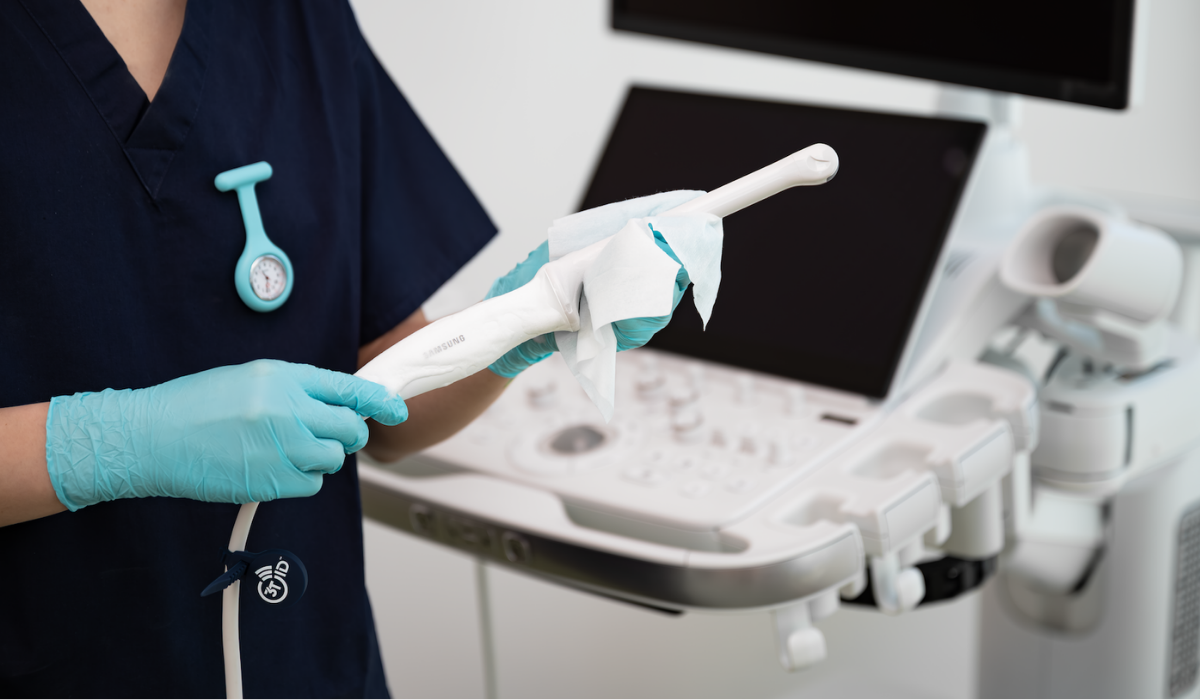
By balancing sustainability objectives with clinical requirements, healthcare providers can support both environmental goals and patient care outcomes.
How healthcare providers can make better purchasing decisions
As healthcare organisations work towards ambitious sustainability and net zero goals, understanding how to evaluate sustainability claims in healthcare products has never been more important.
The NHS net zero journey
Why supplier evidence matters more every year
2028–2032
80% cut in the emissions the NHS controls directly
2036–2039
80% cut in the emissions it can influence, including suppliers
2040
Net zero for the emissions it controls directly
2045
Net zero for the emissions it can influence
Source: NHS England, Delivering a ‘Net Zero’ National Health Service.
By focusing on transparency, independent verification, lifecycle assessments and measurable evidence, healthcare providers can move beyond headline claims and make more informed purchasing decisions.
Reflect on your practice
Choose one product your team uses every day. Can you find a verified Product Carbon Footprint for it? If not, which of the five questions above would you put to the supplier first?