

De zorgsector draagt in belangrijke mate bij aan de uitstoot van broeikasgassen en afvalproductie. Wereldwijd is de sector verantwoordelijk voor 4,6% van de totale CO2-uitstoot en genereert ze jaarlijks miljoenen tonnen afval.1 Een aanzienlijk deel daarvan is afkomstig van producten voor eenmalig gebruik.2
Steeds vaker wordt gekozen voor medische hulpmiddelen voor eenmalig gebruik.3 Die populariteit wordt onder meer gedreven door de wens om ziekenhuisinfecties (HAIs) te voorkomen en door het gebruiksgemak. Daar staat echter tegenover dat deze producten een aanzienlijke impact hebben op het milieu.4
Medische hulpmiddelen voor eenmalig gebruik kennen al jaren een sterke groei, en de verwachting is dat deze trend zich verder zal doorzetten.5 Deze toename wordt voornamelijk gedreven door bezorgdheid over potentiële risico’s, de focus op het verminderen van zorggerelateerde infecties (HAI’s), patiëntveiligheid en het gedrag van de gebruiker. Tegelijkertijd toont een systematische literatuurstudie aan dat herbruikbare medische hulpmiddelen vanuit milieuoogpunt vaak de duurzamere keuze zijn. Over hun volledige levenscyclus bekeken, hebben zij doorgaans een aanzienlijk lagere koolstofvoetafdruk dan vergelijkbare hulpmiddelen voor eenmalig gebruik.6
De markt voor medische hulpmiddelen voor eenmalig gebruik blijft sterk groeien. In 2025 werd de marktwaarde geraamd op 25,18 miljard dollar, met een verwachte stijging tot 42,43 miljard dollar tegen 2030.7
| Een hulpmiddel dat is ontworpen voor eenmalig gebruik, voor één procedure en nadien wordt weggegooid. | Een hulpmiddel dat ontworpen is voor herhaald gebruik, zoals een chirurgisch instrument dat na elk gebruik wordt gereinigd en gesteriliseerd. |
Zorgprofessionals staan voor de uitdaging om infectiepreventie, -controle en duurzaamheid met elkaar te verzoenen. Om weloverwogen keuzes te maken, is het belangrijk de milieu-impact van zowel wegwerp medische hulpmiddelen als herbruikbare alternatieven te begrijpen.
Daarom bekijken we de belangrijkste conclusies uit twee recente studies:

De milieu-impact van herbruikbare versus wegwerpbare flexibele laryngoscopen
Wegwerpbare laryngoscopen zijn een treffend voorbeeld van de lineaire economie, het zogenaamde ‘take-make-waste’-model, waarbij producten worden gemaakt, gebruikt en vervolgens weggegooid, vaak zonder rekening te houden met de bredere impact op het milieu.
Deze studie is de eerste die de milieu-impact van wegwerpbare en herbruikbare flexibele laryngoscopen in kaart brengt, kwantificeert en met elkaar vergelijkt. Hiervoor maakten de onderzoekers gebruik van een cradle-to-grave-benadering volgens de ISO 14040-norm, waarbij de volledige levenscyclus van beide hulpmiddelen werden geëvalueerd aan de hand van volgende fasen:
- Ontginning van grondstoffen
- Productie
- Transport en distributie
- Gebruik door de consument
- Herverwerking van herbruikbare medische hulpmiddelen via een geautomatiseerde ultrasone reiniger, evenals het verbruik van PBM’s, afval, energie en water.
- Gebruik van medische hulpmiddelen voor eenmalig gebruik (energieverbruik)
- Afvalverwerking aan het einde van de levensduur
Wat was de conclusie?
Uitgaande van een levensduur van zes jaar voor een herbruikbare laryngoscoop en 218 laryngoscopieën per jaar, werd de vergelijking gebaseerd op 1.308 toepassingen. De studie toonde aan dat het gebruik van een herbruikbare laryngoscoop ten opzichte van een wegwerp alternatief leidt tot 31% minder CO2-uitstoot, wat neerkomt op een besparing van 804 kilogram CO2 (kg CO2e).

Toelichting grafiek
- Over 1.308 toepassingen bedroeg de uitstoot van de herbruikbare laryngoscoop 1.816 kg CO2e, tegenover 2.619 kg CO2e voor de wegwerp-laryngoscoop.
- Herbruikbaar: 62% van de CO2-uitstoot was toe te schrijven aan het gebruik van persoonlijke beschermingsmiddelen (PBM) tijdens de herverwerking.
- Wegwerp: 80% van de CO2-uitstoot was toe te schrijven aan de grondstoffen en productie.
Bovenstaande grafiek toont aan dat bij de herbruikbare laryngoscoop 62% van de totale uitstoot van broeikasgassen verband hield met de productie van PBM en de herverwerking in een geautomatiseerd ultrasoon reinigingssysteem.
Bij de laryngoscopen voor eenmalig gebruik was maar liefst 80% van de uitstoot (2.095 kg CO2e) toe te schrijven aan de grondstoffen en de productie van het hulpmiddel.
De vergelijking toonde aan dat laryngoscopen voor eenmalig gebruik in negen bijkomende impact categorieën een grotere milieubelasting veroorzaakten dan herbruikbare laryngoscopen, waaronder:
- 14% meer uitstoot op de menselijke gezondheid door kankerverwekkende emissies.
- 40-50% meer uitstoot in de categorieën klimaatverandering, eutrofiëring, effecten op de luchtwegen en uitputting van fosiele brandstoffen.
- Een dubbel zo grote impact op smogvorming en verzuring.
- Minstens 4,5 keer grotere impact op het vlak van niet-kankerverwekkende gezondheidseffecten en ecotoxiciteit.
- 96 keer meer uitstoot van ozonafbrekende stoffen (9.500%).
De studie berekende bovendien dat het omslagpunt al na 82 toepassingen wordt bereikt: vanaf dat moment veroorzaakt een herbruikbare laryngoscoop over haar volledige levenscyclus minder broeikasgasuitstoot dan haar wegwerpalternatief.

De vergelijking van de milieu-impact en materiaalsamenstelling van wegwerp en herbruikbare duodenoscopen.
Widespread adoption of single-use devices has greater environmental challenges and requires a balance between infection control and environmental responsibility. Carbon footprinting can help you, as healthcare providers, make sustainable choices in your healthcare practices.
This study compared sustainable strategies of three different scenarios:
- Exclusive use of a reusable duodenoscope over 1600 procedures.
- Exclusive use of single use duodenoscopes over 1600 procedures. Two different manufacturers of single use devices were used, referred to as single-use A and single-use B.
- Frequent use of a reusable duodenoscope (1405 procedures) with occasional use of single use duodenoscopes (single-use A & B) (195 procedures).
The study included the following comprehensive cradle-to-grave stages:
- Raw material extraction
- Manufacturing
- Transportation and distribution
- Consumer use
- Single-use (energy use)
- Reusable reprocessing via a washer-disinfector, with reagents and PPE, waste, energy and water consumption
- End-of-life disposal as biomedical waste via high temperature incineration
What was the conclusion?
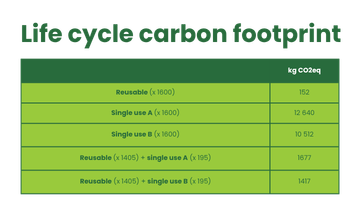
This lifecycle assessment demonstrated the sustainability of the reusable devices, with a carbon footprint of 62-82 times lower than the universal use of single-use devices, and 10 times lower than the occasional use of single-use devices.
Material composition and end-of-life
The single-use devices were mainly made of plastic polymers, while reusable devices are primarily metal components. Although reusable devices have higher manufacturing emissions, they have proved to be more environmentally friendly at end-of-life because they can be easily recycled. In contrast, single-use devices fall under the category of biomedical waste and must be sent to high temperature incineration. This process significantly amplifies pollutant emissions compared with disposal in landfill sites, producing 6176 – 5152 kg CO2e over 1600 uses.
Environmental footprint
Reprocessing is often cited as a major contributor to the economic costs and environmental footprint of reusable endoscopes and is often used to justify single-use strategies; however, this study reveals that reprocessing accounts for a small carbon footprint, 128 kg CO2e, over the lifetime of a reusable device compared to the incineration of single-use.
Based on the total carbon footprint of all scenarios (shown in the graph below), this study found both the exclusive and occasional use of single use duodenoscopes would have a significant negative impact on our environment.
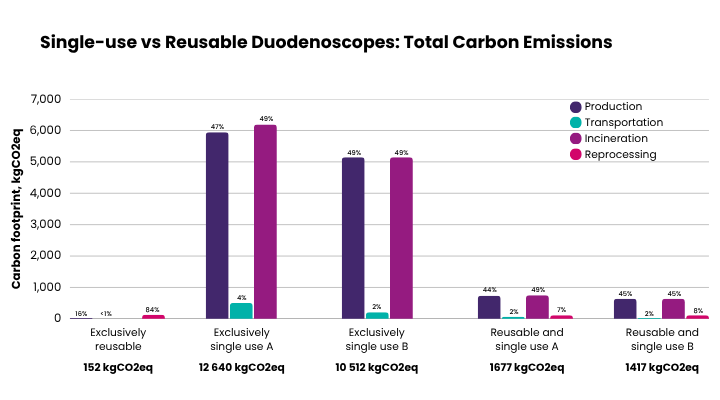
Over the approximate lifetime of just one reusable device, the global adoption of single-use devices would be equivalent to producing 220,000 plastic water bottles.
In terms of greenhouse gas emissions, both footprints of exclusively single-use scenarios were equivalent to heating an apartment for three years.
Finding the balance
Keeping patients safe, making life easier for healthcare workers and looking after our planet does not have to come at the cost of the other. Single use devices have a profoundly negative influence on our environment. They may feel convenient, but our environment pays the ultimate price.
In both studies, reprocessing was the largest contributor to the carbon footprint of reusable devices, accounting for 62% and 84% of the total carbon emissions, due to the use of energy- and water-intensive methods such as automated ultrasonic washers and washer-disinfectors.
Choosing more sustainable reprocessing methods can significantly reduce your impact and you can find the perfect balance of hygiene and convenience without compromising sustainability.
For over 30 years, Tristel has stood at the forefront of infection prevention, dedicated solely to halting the transmission of microbes across environments, objects and individuals. Our cutting-edge chlorine dioxide chemistry ensures thorough disinfection, meeting regulatory requirements with a fast-acting nature and broad-spectrum efficacy. So why choose Tristel?
Effective
Tristel products utilise our propriety chemistry chlorine dioxide, effective against:
- Reducing healthcare-associated infections.
- A wide range of pathogens, including bacteria, viruses, protozoa, yeasts, fungi, mycobacteria and bacterial spores.
Short contact time, short total reprocessing time
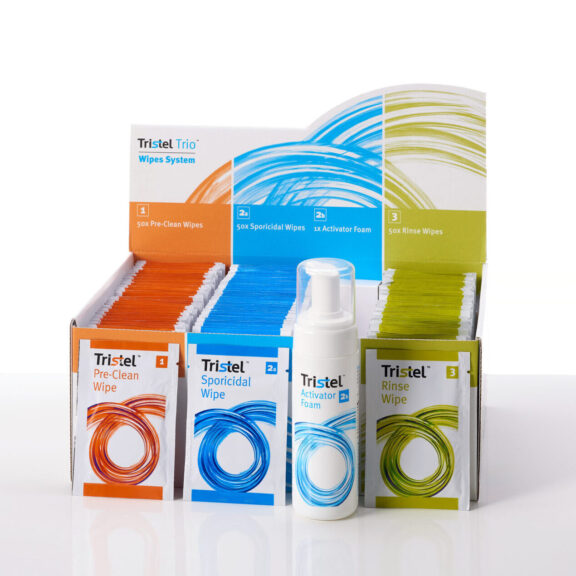
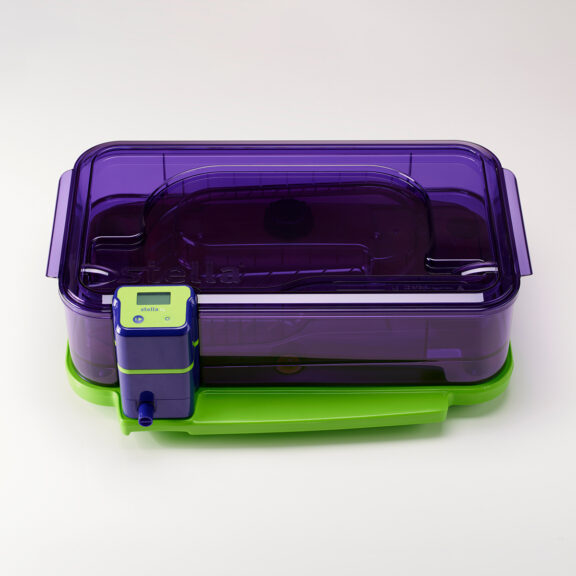
Designed with short contact times, Tristel Trio Wipes System and Stella System enables rapid high-level disinfection without compromising safety or compliance. This efficiency allows for minimal total reprocessing time.
Ease of use at point of care
Tristel Trio Wipes System and Stella System are simple to use, with clear instructions making effective disinfection easy to achieve every time. Both are lightweight and small, allowing for easy set up to be used at point of care.
The carbon footprint of Tristel Trio Wipes System
The Tristel Trio Wipes System, although at first appearing disposable, offers a lower-impact alternative. Its carbon footprint, calculated and third-party verified to ISO 14067, is substantially lower due to:
- No requirement for electricity, heating, or water
- Ease of use at the point of care
- Lightweight materials requiring minimal manufacturing processes
Overall, it presents a more environmentally sustainable reprocessing approach.
REFERENCES
1 Tee, N. C. H., Yeo, J.-A., Choolani, M., Poh, K. K., & Ang, T. L. (2024). Healthcare in the era of climate change and the need for environmental sustainability. Singapore Medical Journal, 65(4), 204–210. https://doi.org/10.4103/singaporemedj.SMJ-2024-035
2, 3, 4 Rizan, C., Mortimer, F., Stancliffe, R., & Bhutta, M. F. (2020). Plastics in healthcare: Time for a re‑evaluation. Journal of the Royal Society of Medicine, 113 (2), 49–53. https://doi.org/10.1177/0141076819890554
5 The Business Research Company. (2026). Single-use medical devices market report 2026. https://www.thebusinessresearchcompany.com/report/single-use-medical-devices-market-report
6,7 Booth, A., Chowaniec, M., Goyal, S., Faulkner, S., & Shaw, S. (2025). The carbon footprints of single-use and reusable medical devices: A systematic review. BMJ Open, 15(12), e108446. https://doi.org/10.1136/bmjopen-2025-108446